285 Days Since Last Incident: Recalibrating Womanhood with Alison Bladh
MenopauseIt
| Rachel Moore | Rating 0 (0) (0) |
| https://www.butwaittheresmoore.com | Launched: Sep 30, 2025 |
| menopauseit@butwaittheresmoore.com | Season: 4 Episode: 47 |
Imagine waking up and realizing your body’s running on a whole new operating system... and forgot to send you the manual. Welcome to menopause, baby.
In this episode of the MenopauseIt Podcast, I sit down with Alison Bladh—award-winning nutritional therapist, esthetician, and bestselling author of Have a Magnificent Menopause. With over 30 years in women’s health and a seriously relatable British-Swedish vibe, Alison shares the science and soul behind why menopause is a complete system reboot (and how to handle it without losing your damn mind).
We talk blood sugar crashes, why “eating healthy” hits different after 40, how weight gain is more complex than calories, and why lifting weights isn’t just for your 20s. If you’re in perimenopause, menopause, or post—you’ll get the clarity, tools, and fire you need to feel good again.
Takeaways
- Recalibration is survival: Menopause isn’t a glitch—it’s an update. Tune in to what your body needs now.
- Your blood sugar is the secret villain: Stabilizing it can reduce everything from brain fog to mood swings and belly fat.
- Protein up, sugar down: A palm-sized portion of protein every meal helps fight fatigue, weight gain, and cravings.
- Start lifting, no matter your age.
Resistance training isn’t about being ripped—it’s about bone strength, longevity, and thriving in your 50s and beyond - Plan your power early: If you're in your 30s or 40s, now is the time to prep your body (and mind) for the change. Prevention is your gift to your future self.
Helpful Resources from Alison:
- Alison’s Website – Free weight management recipes + menopause resources
Have a Magnificent Menopause – The ultimate guide to feeling vibrant through the change - The Menopause Charity (UK) – Trusted, evidence-based guidance
Feel more prepared? Inspired? Even a little less alone?
- Follow MenopauseIt Podcast on your favorite platform
- Subscribe + share this episode with the women in your life
SUBSCRIBE

Episode Chapters
Imagine waking up and realizing your body’s running on a whole new operating system... and forgot to send you the manual. Welcome to menopause, baby.
In this episode of the MenopauseIt Podcast, I sit down with Alison Bladh—award-winning nutritional therapist, esthetician, and bestselling author of Have a Magnificent Menopause. With over 30 years in women’s health and a seriously relatable British-Swedish vibe, Alison shares the science and soul behind why menopause is a complete system reboot (and how to handle it without losing your damn mind).
We talk blood sugar crashes, why “eating healthy” hits different after 40, how weight gain is more complex than calories, and why lifting weights isn’t just for your 20s. If you’re in perimenopause, menopause, or post—you’ll get the clarity, tools, and fire you need to feel good again.
Takeaways
- Recalibration is survival: Menopause isn’t a glitch—it’s an update. Tune in to what your body needs now.
- Your blood sugar is the secret villain: Stabilizing it can reduce everything from brain fog to mood swings and belly fat.
- Protein up, sugar down: A palm-sized portion of protein every meal helps fight fatigue, weight gain, and cravings.
- Start lifting, no matter your age.
Resistance training isn’t about being ripped—it’s about bone strength, longevity, and thriving in your 50s and beyond - Plan your power early: If you're in your 30s or 40s, now is the time to prep your body (and mind) for the change. Prevention is your gift to your future self.
Helpful Resources from Alison:
- Alison’s Website – Free weight management recipes + menopause resources
Have a Magnificent Menopause – The ultimate guide to feeling vibrant through the change - The Menopause Charity (UK) – Trusted, evidence-based guidance
Feel more prepared? Inspired? Even a little less alone?
- Follow MenopauseIt Podcast on your favorite platform
- Subscribe + share this episode with the women in your life
Imagine waking up and realizing your body’s running on a whole new operating system... and forgot to send you the manual. Welcome to menopause, baby.
285 Days | Alison Bladh
Introduction and Guest Introduction
[00:00:00]
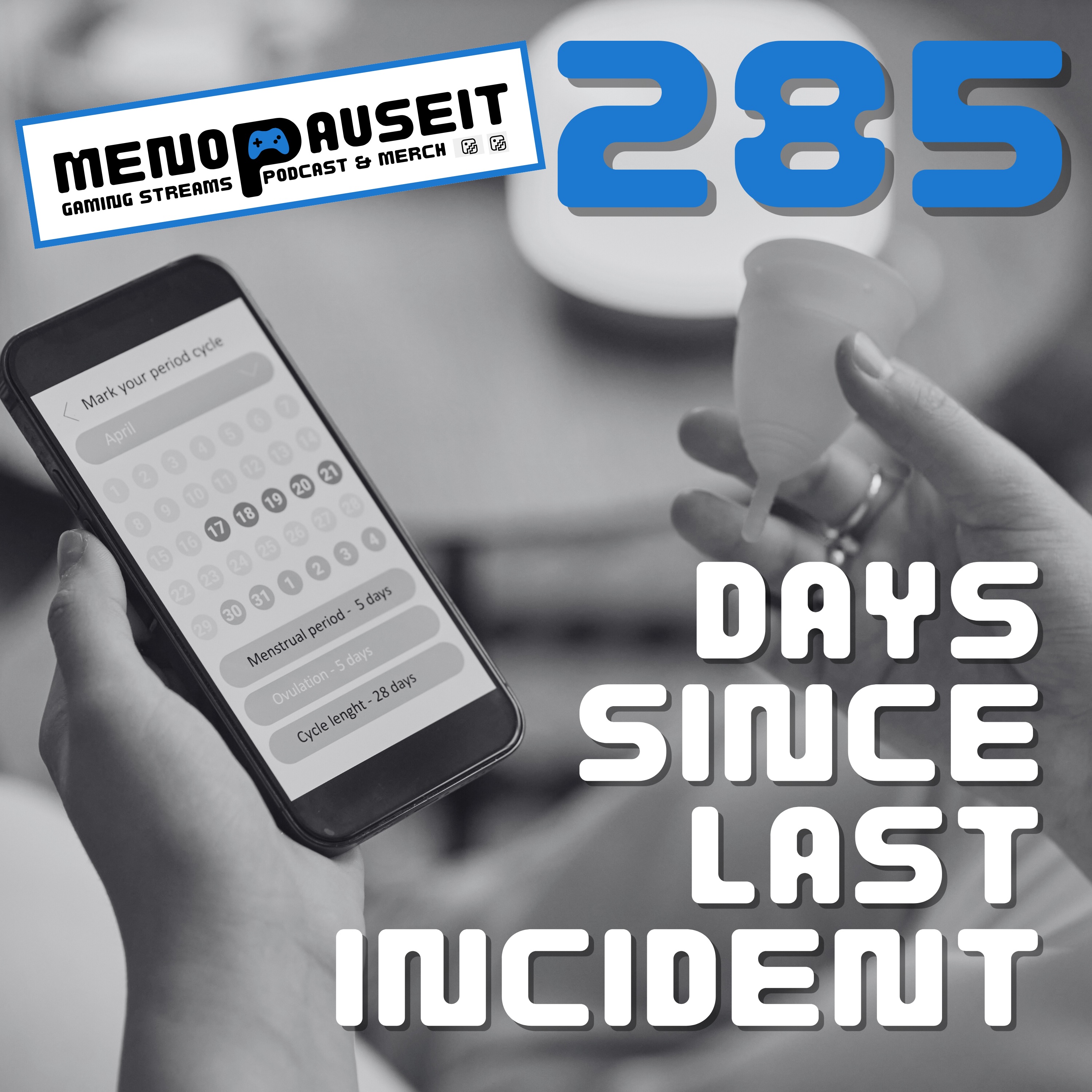
Rachel: Welcome back everyone to yet another episode on menopauseIt. We are, by the way, I will say that this episode is titled 285 days since last incident because as we all know, if you know about menopause, technically you're in menopause.
Rachel: If you're 12 months without a a menstrual cycle, which we're talking about here today. So that is today's episode, and I'm welcoming on a guest. I'm very excited about, again, moving the needle, making sure we all know what we need to know about menopause. Please allow me to introduce who we're going to be talking to today.
Rachel: She is a number one international bestselling author of, and I love this title by the way, have a magnificent menopause. A straightforward guide to looking good and feeling great. Oh my gosh. So our guest is an award-winning registered nutritional therapist and esthetician, and I'm gonna do a lot of letters here with A BSC Honors m bant.
Rachel: I have a feeling we'll talk a little bit more about what these means. [00:01:00] M-C-N-H-C-M-N-M-T. End, C-I-D-E-S-C-O accreditation. This is I just feel smarter saying all this stuff. With over 30 years of experience in the health and wellness industry, she specializes in helping women in midlife, menopause, and beyond reclaim their health, confidence and zest for life.
Rachel: I am excited about that 'cause I love the zest As an accomplished author, speaker, webinar host and health writer, she's passionate about empowering women. To take charge of their wellbeing. Alison firmly believes that every woman deserves to feel vibrant and confident, and without being held back by symptoms that diminish the quality of life.
Rachel: Amen to that. I'm thrilled to welcome Alison Blo to menopause.
Rachel: Alison, thanks so much for joining us on the podcast.
Alison: Well, thank you. Thank you, Rachel, for having me on your podcast today. It's a pleasure to be here.
Rachel: I, I told about all your accreditations and letters. I love when I can get someone smarter than me especially about menopause, but just generally on an, any podcast because I'm just gonna learn a ton [00:02:00] and I know our viewers are as well. I know I, I only like said a few sentences.
Rachel: Lots of letters, but just a few sentences about you. I do wanna toss it back to you a little bit because I mean, that's, you're a whole person and that barely scratches the surface.
Alison Blo's Background and Expertise
Rachel: So, tell us more about you. Like, what is your world like, family, job interests, where are you coming from? Let us know a little bit more about who Alison is.
Alison: Yeah. a, as I was saying to you earlier, Rachel, I am actually British from London. But at the moment I'm living in Stockholm in Sweden, which is beautiful for anybody that's been to Scandinavia. It's I'm very spoiled. I really do try to practice what I preach and I live out in nature.
Alison: You know, I can go out into the forest. I live near a lake. I'm very. Spoiled because that is so important, isn't it, for self-care and our overall health and wellbeing. I uh, very short story about me. I was brought up on a farm in the United Kingdom. Very lucky to have, you know, my mother grew all her own vegetables and [00:03:00] fruits and everything.
Alison: And my mother was a chef, so she was a professional chef. So from a very young age, I started in, you know, in the kitchen making food with her. And that's. Really where my passion for food came in from a very young age, and that led me into, you know, nutritional therapy and studying nutritional science et cetera.
Alison: I am more of on a personal note. I'm a great believer in pushing yourself out of your comfort zone.
Alison: To grow as a person, you know, and I'm not saying you have to go and do things like jumping out of airplanes, you know, if that's your thing, maybe, but, you know, just little things.
Alison: So I really do try to push myself all the time to learn new things. I took up golfer a few years ago which certainly pushes you out of your comfort zone virtually every time you go out on the course. But. I do a lot of speaking in women's health. I do a lot of podcasts and webinars and all of that thing.
Understanding Menopause and Personal Experiences
Alison: My mission really is to educate women in [00:04:00] menopause. So we start talking about this more so women can feel great through this transition in life.
Rachel: Yeah. I'm here because I wanted, I started going through menopause and I was like, what? And by the way, I curse on this podcast. I'm not saying you have to, but I will be like, I was like, what the fuck? and I know I'm not alone in feeling that.
Rachel: I feel like menopause was just as like, yeah, you're just gonna go through it. Whatever, you'll stop having menstrual cycle. That is so not all it is. But I've been really keen too, like you said, even if I've had people on this podcast who maybe have never been on a podcast, and I'm like, bring it.
Rachel: We need to have your experience and your knowledge and I love that you're already out there sharing everything that you know to help people with this. And I mean, that, that segues us nicely into obviously the topic of the hour, which is menopause. I wanted to ask you, this might be tough or maybe you're like, oh, I'm I have it ready. What is one word that you would use to describe your menopause experience so far?
Alison: Yeah, I love that question. I would [00:05:00] say for me it's recalibration.
Rachel: Yeah. Yep. Everything's different, right? my husband's a mechanic and so he will talk my ear off about stuff I don't care about about like, oh, I've gotta do this and tune this. And think he probably though, understands recalibrating more than I do. But expand a little bit about that.
Rachel: what have you had to recalibrate?
Alison: it, it was as if. I mean, I, I should know this, this is my profession, but even so, you know, you're so used to helping all other women and then when it kind of happens to you, creeps up. But it felt like my whole body really needed like a system audit, like a full what is going on? You know, I need to recalibrate.
Alison: I can't carry on doing the things that I'm doing because they just don't work anymore. That you really need to listen. To how your body's feeling. Listen to the symptoms that you may be experiencing. And then, you know, doing things, [00:06:00] seeing, okay, that I can't do that anymore. I need to do this instead. So it was changing a lot of things really, and kind of resetting my body for the stage that it was in.
Rachel: Yeah. Yeah, it's, it almost feels like, you know how like you might have a best friend you've known for years and you get together and you're always, you know, you're on the same page and same way of like, but then they show up one day and they're speaking a different language, and you're like. What just happened?
Rachel: What? And now you're like, I don't understand what you're trying to tell me. You know, and you can't make sense of it. It really feels like that. May I ask what stage of menopause are you currently in? Like I said I'm, I'm at a day 285. I'm not officially in menopause yet, apparently, clinically, but where, whereabouts are you with it?
Alison: I'm actually in menopause. Well, I suppose you would say I'm in post menopause. Um, But it kind of, that I really get that perimenopausal thing, you know, you've gotta wait for the year with no periods. I felt I was in perimenopause like [00:07:00] just forever. I was like, when is, when is this ever gonna end? ' 'cause you, you know, you'd have nine months, 10 months without a menstruation, and then all of a sudden.
Alison: You'd have a period, so you'd be like, okay, I'm still in, perimenopause, but I am actually now it would, I haven't had a period for a couple of years, so I am in post menopause now.
Rachel: Oh my gosh, I, and that's the thing, I think that's so hard. There's no formula to this. Like, once again, it's very nebulous. Like when our mothers or any of our, you know, female friends, relatives who'd been, oh, yep, it's just coming. You'll go through it, whatever. Yay for you. You won't have to buy feminine hygiene products anymore.
Rachel: That's a very small, yay. It's, that's not, it doesn't quite cover everything because it really, all of that recalibration, like you said just upends everything. And it's not just that one physical manifestation. It is everything. And for some women, if you're listening to this out there and you're like, literally, it was just that.
Rachel: And I've had a, maybe they've had a magnificent menopause that's so [00:08:00] wonderful for you and we're very happy for you. But. It's, that's really, at least for you and my me talking here, that hasn't been our experience. I wanna dig into your expertise here though, too, because like, like you said you've really helped, you've wrote a book about having a magnificent menopause and speaking from nutrition.
Rachel: I guess I wanna start first. What is one thing, and we'll obviously get into more than one thing, but if there's one thing you wanted women who are about to go through menopause or going through it to know from your expertise, what would that thing be?
Alison: I think obviously there, as you said Rachel, there are many things, but if I was only to pick one thing and this might, you know, people would be like, oh, they're probably expecting me to say something really exciting is.
The Importance of Blood Sugar Balance
Alison: Get your blood sugar balance in control. You know, if you can do that, it will save you a lot of symptoms.
Alison: You know, all the list goes on a unregulated blood sugar. It's [00:09:00] just not the friend, well, it's not the friend of anybody, but it's certainly not the friend of a menopausal woman. Woman. And when I say blood sugar ballads, I mean eating. I balance eating foods that keep your blood sugar stable rather than, you know, for example all the refined processed foods that, uh, unfortunately we are living in a very toxic food environment and, you know, all the packaged foods, all of those foods that that all the grocery stores, you know, they, all of them have many of these products, they normally contain quite a high amount of sugar.
Alison: They can contain damaged fats and they contain like a list of ingredients that you don't even know what they are. These sort of foods shoot your blood sugar up 'cause they're very refined. You can absorb them very quickly.
Rachel: Yeah.
Alison: When your blood sugar's high, your body obviously doesn't like that, so it sends out the hormone insulin.
Alison: Now, insulin is a hormone that allows your cells to [00:10:00] utilize the glucose, the energy. So it's a bit like the key that opens up the cell
Rachel: Yeah.
Alison: and then your blood sugar drops. But it does a very good job insulin, so your blood sugar will actually crash. And then what happens? Your brain is, your brain's very clever and it'd be like, oh, hold on a minute.
Alison: We've got low blood sugar. You need to eat something.
Alison: It's not gonna send you to the, you know, the broccoli salad. It is gonna send you to the biscuit, tin,
Rachel: Yeah.
Alison: the muffins, the cakes. 'cause it knows that, that gives you quick sugar, quick energy release, and you go kind of into this rollercoaster ride.
Alison: And the reason that this is so detrimental, particularly in, in menopause, is that due to the hormone decline, we can. A lot of women find that they're not what is, what we call not sensitive to insulin, which means that the insulin, that allows your body to utilize the glucose, your body doesn't have that same sensitivity to it.
Alison: So it means that your blood sugar can rise [00:11:00] and the key doesn't work like it used to allow it to go in the cell. And you know, the next stage on from that is diabetes two. You can be, you know, insulin resistance as it's called pre-diabetic and then, and diabetes too. And also there's so many other things going on.
Alison: You know, you've got stress that comes into blood sugar management, cravings, you know, when you're feeling terrible, which you can do during menopause. You crave things like comfort food and you know, all of the things that. Good for your blood sugar. So blood sugar balance, eating whole foods, eating protein, healthy fats, carbohydrates predominantly from vegetables, you know, and whole grains.
Alison: That, that is a very short explanation really of how to eat to manage your blood sugar. But that's a key thing for menopausal women.
Rachel: Well, and it can be so tough. We just talked about, again, going back to your word [00:12:00] recalibration I think once you hit. You hit that point where you are about to hit menopause and it's gonna be different for all women. I know there might be like some standard ages, age ranges where, oh, well most women hit menopause here.
Rachel: I would just encourage everyone, you know, if you know what your mother's history was, know that. I remember I was experiencing symptoms and I was 47, almost 48, and my doctor for over a year was like, well, you're too young. And I'm like. Excuse me. My mother was 48 and so apparently not.
Rachel: so all that to say you can be different ages when you go start to go through this, but. we've had a long history with our bodies by that point. What may maybe we have figured out like, well, yeah, my body, I'm cool. I can like, have that extra thing, sugary thing and it doesn't really impact my weight, say or stuff like that.
Rachel: But we get to that recalibration and then you talk about I really think this is fascinating with the blood sugar thing, it's definitely not something I like specifically thought [00:13:00] about. Or I know I was just like, Hey, take my panels and find out what my hormones are doing to figure out if I'm in menopause.
Rachel: But that's, does that explain too, like the weight gain? I mean, I know so many women go through menopause and this becomes a huge. Like literally a huge thing where we're like, maybe we had a certain lifestyle we had where I know I can exercise this much, I know what I can eat and I can maintain this kind of weight or whatever.
Rachel: That's good for me. But then we hit menopause and the whole thing is upended, but it feels like The blood sugar part might play a huge role in that as far as. Here's kind of why everything just went on its head because now, and it's all outta control. I would assume that figures in a little bit, at least a little bit into that whole aspect of menopause.
Alison: Yeah, absolutely. I mean, weight management that, you know, I work with clients in clinical practice and that is, you know, one of the, I would say top some of the top reasons why they come to me is that, you know, they're doing everything right. [00:14:00] They're eating well, they're exercising. But there's, you know, you get particularly around the abdomen, the tummy area, you get this extra, you know, tire.
Alison: And in answer to your question, yes, blood sugar is, plays a big piece in that, in weight management because if your body's not utilizing the, you know, if you've got high blood flow, it's you've got insulin sensitivity. That means that your blood sugar will probably stay higher than it should be, and your body will pump out more insulin.
Alison: And what we have to remember is insulin is a fat storing hormone.
Rachel: Yep.
Alison: So that is one of the things that you see, you know, and it collects particularly around the tummy area. Another big thing with weight gain that a lot of people don't think about is stress. Because of cortisol. Cortisol is the stress hormone, and cortisol also is a fat storing hormone.
Alison: And when you're chronically stressed which it feels like everybody is at the moment [00:15:00] you know, cortisol will be released into the system and cortisol thinks, you know, your body thinks you need to run away from something. It thinks there's a danger. You know, there isn't, well, maybe there isn't in society, but in general there isn't, you know, you're either stressed 'cause you've had an argument with your boss or you're late for work or whatever.
Alison: And cortisol in the bloodstream releases energy into the bloodstream so it releases glucose or glycogen into the bloodstream. It thinks you need energy to run away from. But that doesn't happen, does it? And then what happens? High blood sugar, cortisol, fat storage.
Alison: I mean, weight gain you, you could talk about for hours in, in menopause 'cause it's very multifactor or unfortunately there isn't just one thing, but there's many things that come into play.
Rachel: Right. Yeah, I, this is again, very eyeopening too, 'cause, it all makes sense. And my gosh, if anyone is watching this or listening to this is Not Stressed, tell us your secret. What are you doing? [00:16:00] And that might be a whole other episode. I know. We'll, I wanna get into like mental health and stuff too down the road too, as we have more guests on here.
Rachel: But I wanted to ask you too, so like. it sounds like I, I alluded earlier to like how I was asking my doctor saying, can we do a hormone panel? You know, and 'cause again, she was insisting I was too young. I'm like, well, based on my mom's age, no I'm not. Can we do this now? 'cause I'm also having all these symptoms.
Rachel: is it feasible then? Should, Should we be asking in a Yeah. As our doctors, as we're seeking healthcare, should we be saying, Hey, and can we look at my blood sugar levels as well? I don't. I feel like I'm blanking out. I don't know how I'm sure I do a physical every year and they're looking at that and like looking at blood sugar levels.
Rachel: But how can we maybe work with healthcare people to help mod moderate that? Knowing now, knowing what we know now, that this is a big, this figure's heavily into our menopause experience, but what would you recommend.
Alison: Yeah, exactly As you said, Rachel, you know, when you go and have your blood work done, the majority, I [00:17:00] obviously, it depends where you go and I think it's different. I mean, I'm in Europe to probably what it is in your part of the world, but you know, you can ask to have your blood sugar. Looked at and then, you know, your doctor will be able to see, they look at it over a period of time.
Alison: Because obviously it depends if you just have it done like now, it depends on what you've eaten and you know, how your day's going and how stressed you are, but they look at it over a period of time so you can get like the average blood sugar. But absolutely, I mean. Not just for menopausal women.
Alison: We should be very aware of what our blood sugar is absolutely doing. And then, you know, testing, I do functional testing with my clients if I feel that they need it, but things like, which is a, is another conversation, you know, thyroid health. Women in, in menopause and as we age, are more vulnerable to what we call hypothyroidism.
Alison: And you know, that weaves in to weight management and you know, if your thyroid isn't working, your thyroid's a [00:18:00] gland that, that sits just at the base of the neck. It's like the engine of the body. It produces different hormones there, that need of your metabolism amongst other things.
Alison: So that kind of comes in with the weight gain, peace and lack of energy and all of that. So, you know, any lady out there that's really feeling exhausted and feels that they've put weight on, have your thyroid hormones checked as well.
Rachel: Yeah. Yeah I know a few women too who have that hypothyroidism and going through menopause. And I do recall. I think when I, I was starting to just pack on weight and was doing all the normal things I'd been doing and I'm like, what is going on? my blood pressure went higher um, too as a result.
Rachel: And I do remember we did, she's like, do you wanna test and see if you're have any di danger, diabetes and the blood sugar? I said, yes. Unfortunately it didn't. However this is all making a lot of sense too, just. We just all do. We react in different ways if for women out [00:19:00] there who are very great with their nutrition, again, I applaud that.
Rachel: I think that's amazing. I cannot say that about myself, unfortunately. And I probably, a lot of people can relate with me too, or it's. Like, yeah, when I'm stressed, I'm gonna find a cookie or, you know, I'm gonna find, I love chocolate. I love chocolate. It loves me back. It's a great relationship except for what it does to me afterward.
Rachel: And that can be really hard And I, man, this does tie in very much in like it's, the nutrition is one part of it, but you talk about the stress, any of us can feel at any time whether we, we had a stressful conversation, but it's triggering all those internal reactions and all. Then that's having a physical manifestation with how we're dealing with this, I guess like.
Discussing the Book: Have a Magnificent Menopause
Rachel: and I wanna get into like talking about your book as well, because you do have a book have a magnificent menopause, which just really, that's possible. A straightforward guide to looking good and feeling great. Yes. Thank
Alison: It's very pink. It's very pink.
Rachel: I love that. I love that. [00:20:00] And you, oh my gosh, you're so on brand, by the way.
Rachel: Look at you with the pink too, with a shirt. Love. I wanna give you a little bit more time with that too, like. We talked about that nutrition part. We're talking, we shared the blood sugar aspect, which is really important.
Key Tips for a Healthy Menopause
Rachel: How do we have a magnificent menopause? Alison, tell us please, and we'll, while I wanna buy, we wanna buy the book.
Rachel: We'll have a link in the show notes for it but tease us a little bit more. How will you tell us to have a magnificent menopause? That seems very unrealistic.
Alison: Yeah I want to change the story around menopause because it has, it is so shrouded with negativity, isn't it? And I mean, we have to remember that it is actually a natural life phase.
Rachel: Yeah.
Alison: and if you try to, and I'm not saying this is easy, you know, I'm very realistic, but if you try to have. Even just a slightly more positive view on it, it makes you feel better.
Alison: You know, there's nothing better than sitting down with your girlfriends and just laughing. About your symptoms or say, oh, I did this, or, you know, your brain fog or [00:21:00] whatever it is, it just makes you feel so much better. But in the book there's actually, there was supposed to be 12 chapters, but it ended up being 13.
Alison: But it goes through like every single thing, like sleep, nutrition, weight gain, skincare. 'cause I'm actually an aesthetician as well. So I understand all the changes that, that go on in the skin due to the hormone decline. But some of the things in the book, you know, I talk about. Protein first.
Alison: You know, make sure that you're eating enough protein. Again, it might sound quite basic, but there's so many women that don't eat enough protein. We need it for muscles. It's the building blocks of the body and really looking at carbohydrates. There's so much information, isn't it, about carbohydrates and no carbohydrates and low carbohydrate.
Alison: So what I do is I really, you know, give that information specifically to women in menopause. What do we want to do with carbohydrates? How much do we need and how, you know, [00:22:00] do, where do we find them? You know, people forget that carbohydrate vegetables are actually carbohydrates,
Rachel: that's right. It's not just bread
Alison: need to. I also talk about my 90 10 rule.
Alison: When you get before the age of 40, the, it's 80 20,
Rachel: Yeah.
Alison: Which basically means if you do everything right, 80% of the time you've got 20%, you know, to eat like you, like Rachel, your chocolate or whatever your thing is. You have a glass of wine. But when you get over 14, you get come into all these hormonal shifts.
Alison: It goes down to 90 10, however,
Rachel: Oh, it's so unfair. So unfair.
Alison: but, you know, 10, there's a lot you can do with 10% that gives you room for you know, playing around and doing the things that you like. And, you know, when I talk about doing thing, eating healthily and leading a healthy lifestyle, it's not about restriction. You know, it's what I call positive nutrition.
Alison: It's eating [00:23:00] delicious, nourishing foods. Don't think of it as, as a diet, you know, it's a lifestyle to nourish your body with wonderful, you know, whole foods that like our bodies are supposed to eat.
Rachel: Yeah I think too, I, this skin, this can be tough. And again, everybody comes from a different experience with this. If you've ever eaten, like, I could go right now and I could be like, yes, I'm gonna have a chocolate chip cookie, and by the way, it's breakfast time, so I'm not gonna do that. Or I could say, or I'm going to have an egg with you know, maybe a little bit of sausage.
Rachel: Or something, you know, but I'm gonna have something that's not the chocolate chip cookie. And I can tell you straight up, and I do have experience with this 'cause I've done this. You do, I do feel different. I feel better with the latter, with the egg and you know, whatever might be more of a balanced breakfast and not just the, oh my god, chocolate sugar and yay.
Rachel: And. What can be difficult is I can see a chocolate chip cookie and they'll be like, oh my God, look, it's gonna taste so good. But I don't know about [00:24:00] you and I dunno about anyone else listening, but the older I get, I am I, it's way easier for me to be like, yes, but how will I feel after I'm focusing on that in the moment now because I don't wanna pay for this later.
Rachel: Because we, I, like you said, I think that percentage, that ratio thing, the 80 20, but then changing to 90 10 makes a ton of sense. 'cause I feel like I'm in an, I have 90% more chance of feeling bad later with eating a bad food than the 80% I had before menopause. Like it's just more, it's more pronounced.
Rachel: But that, again, that's a mindset shift and that's hard. It's challenging. So it's not just a flip a switch it's, you almost gotta train yourself to think that way as things progress. But dang, that's, yeah.
Alison: It's not easy, it's difficult and like you say, but it, I love what you said there, Rachel. 'cause even though it's a mindset shift, you know, if you eat that cookie in the morning, it just makes you feel terrible. So, you know, you, and when you don't eat that and have a, a nourishing breakfast, you feel so much [00:25:00] better. You remember that next time you reach for that cookie in the morning, you'll think I don't wanna feel like that. I'm actually gonna eat the eggs.
Rachel: That's right. That's right. I know it's, it's funny 'cause my son is 19 and he just realized maybe about a year and a half ago, 'cause he was having a donut every damn day. And of course he can do that. He's just like, Mr. Super skinny. He's like Jack Skellington walking around. He's like super skinny.
Rachel: But he was feeling like crap. And then he is like, stop doing that. He is like, wow. It's amazing how I don't feel that way. And like, yeah, even when you're young. And, you know, not going through menopause. I know we're getting close to the end of our time, which I, we could go on and on. And again, we'll have your book in the show notes.
Rachel: 'cause we definitely want, we wanna offer resources. And I will get to that in a second. 'cause I know I wanna ask you what are some resources you like to look to, but first. I know I asked you a couple of like, Hey, what's one thing you want people to know? What's one word you could use to describe menopause?
Rachel: For women who are watching or listening to this who have not yet hit menopause, [00:26:00] I guess I'd love to know what would you like to say to them?
Advice for Younger Women
Rachel: And this might come off the positivity thing you were just talking about, but Yeah. What would you like to them to know about
Alison: Yeah, that there is actually the reason my book has 13 chapters, because I wrote a chapter specifically called What I Wish I'd known when I was 30,
Alison: And I wasn't gonna put that in, but my publisher said, no, you have to put that, it's brilliant. So yeah. So there's what. If you are not yet in menopause, you know, you're a younger woman, what I would say is knowledge is power.
Alison: Just you don't obviously need to study menopause so you know everything, but understand kind of what will happen or, or what to expect. you, you know that when you start experiencing the symptoms, you're like, ah, this could be perimenopause. But what I would say to women is start now, you know, with simple things like.
Alison: Lifting. We need to, we haven't really spoken so much about movement, but you need to lift things. We need to keep our muscles strong. That is really [00:27:00] important for women in general, but even more so when we come into menopause. So if you know, if you come into menopause with a strong body, you know, with a, with good muscles, it most likely will.
Alison: Make the experience much easier. There is actually research, some research to show that, you know, if you go into menopause in more of a, a healthier state you know, with good weight management muscles, et cetera, that your experience of it is much better. So. Lifting things. You don't have to go and spend hours at the gym.
Alison: You can do resistance training at home. You can lift, you know, things that you have in your house. Very important. And again, you know, you're going to be sick of me talking about protein, but make sure that you're eating enough protein. We need is roughly what I say is a easy guide. It's around a palm size of protein with every meal.
Alison: So breakfast lunch and dinner. And then really be mindful of things [00:28:00] like caffeine alcohol, you know, see how these affect your body. 'Cause they can really have knock on effects on everything from sleep, you know, to, mood, everything, cognition. So really being aware of that. And then one thing that we should all do is really guard.
Alison: Guard our sleep. Sleep is sacred. You need sleep for everything really. If you're not sleeping well, it affects everything in your body. So those are some of the things that I would say to women that aren't, you know, yet in perimenopause,
Rachel: Yeah. Brilliant. Yeah. I think that's great. And. I totally agree with that too. I, the more you can set yourself up and that really just kinda reverse engineers too. Like you, you wanna live healthy now and if you're young and, you know, menopause is maybe just way down the road for you. Great. You know, but like, like you said, Alison, just set yourself up for success.
Rachel: Just overall, you know, and I [00:29:00] love that you mentioned that too. I was just having a discussion with my daughter. She's 16 and she's got some medical issues with like her knees and stuff, which we're of course having to seek healthcare for. And we're glad that there's like, you know, solutions there.
Rachel: But she knows she needs to lift weights and I know I need to lift weights. And so we were even having a discussion. I'm like, yeah, usually I'm like, I. Have I done this for over five days? No, and I need to, we just have some little free weights out in the garage and I usually just pop something in. I'll watch like a podcast or something and I'll just do it for 20 minutes just to get that, you know, bit of training going there.
Rachel: But I don't do it regularly and I need to, and I'm losing muscle mass. As we go. 'cause I am 50 and I am in menopause and that is what it is. She is not there, but she still knows that she needs to try to attain that. And I really appreciate that. But you know that she's got that awareness.
Rachel: But I think it, you know, so many of us might just go about her day and not realize the muscle masses is important. So I just wanted to say that hit me personally to be like, yes, I need to get out there today and lift some weights. Those just little weights will be [00:30:00] good.
Fun and Personal Questions
Rachel: Alright, I wanna get into some kind of casual, get to know you questions here, Alison, because obviously we know you've written your wonderful book. And again, we'll have it in the show notes. Have an, a magnificent menopause, a straightforward guide to Looking Good and feeling Great. You've made me feel great during this podcast, so I appreciate that and I think anyone listening will.
Rachel: Feel a little bit more empowered, at least about how to deal with their own. But these are kind of more like, okay real talk here. We're women. You know, we're in our stages of menopause. Let's answer some questions here. if we were to catapult you away from real life, where do you picture yourself?
Rachel: Like where, you know, you're like, I can just check my schedule. Just budget isn't an issue and we could just catapult you somewhere you'd wanna be, describe that scene to us. Where would you be enjoying yourself, your life?
Alison: I'm a, great scuba diver. I love, I the ocean is my place. I just feel so. Balanced and happy when I'm, and I'm either on top of the sea or under it. So my place would be, you know, in the beautiful sunny climate [00:31:00] drifting on coral reef. Looking at all the beautiful fish and the colorful seaweeds and everything.
Rachel: Oh, that sounds glorious. I am not a scuba diver and I tend to, like, I have a very healthy fear of the ocean. I am not Moana. I am not like, let me go out to the no. So I, I very much respect that. But I have been underwater a couple times and it is pretty amazing and totally. Different world down there, so that's really cool.
Rachel: okay. What article or type of clothing have you decided personally should be thrown into the fire of a thousand sons? Never to be worn again? Because why are people making us wear or buy this thing? What would that article of clothing be?
Alison: I think it has to be, makes me laugh. It has to be the really tight, like almost see-through leggings that you buy, you know, that you can wear when you go to the gym. Particular those ones that are in nude, you know,
Rachel: oh
Alison: the skin colored ones. So see-through nude leggings.
Rachel: look, I, [00:32:00] my husband and I saw a woman the other day and she I think it was a top. But it was certainly, and it was nude and we of course we're doing the double take, like, oh yes, I would have to agree. I mean, I have my, I have a healthy share of Le leggings, but none of them are see-through. 'cause ain't nobody wanna see any of that and I don't wanna be showing it.
Rachel: But um, yeah, I mean, be comfortable in your skin, but obviously yeah I, that's not comfortable to me either, so I would totally relate to that. Is there a charity or a for good cause or organization you'd like our audience to know about that, that you feel is making a difference that you'd like us to direct our rage or money or action toward?
Alison: Yeah, I mean the, there's obviously, this is in the, in Europe, it's actually in the United Kingdom. There's a charity called the Menopause Charity uh, which is fantastic because it's really. Educat, it's giving people or women the evidence based knowledge that we need around menopause because [00:33:00] has, particularly in the United Kingdom. A lot of celebrities have got behind, which is great, you know, because knowledge is getting out there, but everybody seems to be jumping on the bandwagon. So it's overwhelming the amount of information and products and, you know, anything that's labeled with menopause suddenly increases in price. So I think the menopause charity really cuts through all that and gives you proper, you know, advice that is actually based on research.
Rachel: That's lovely. Oh my gosh. Yeah, I've taken that down. We'll put that link in the comments as well. And now we wanna kind of find out is there anything like that around here in the United States too, but, uh. hey, we're helping women everywhere wherever they're located, and we wanna make sure they've got the resources they need because we'll just keep raising that tide for all of us.
Rachel: But Alison you have raised the tide for us today. I, I actually do feel more positive about menopause. I'm honestly gonna say, I mean. The big reason I started this show and this channel is because I felt like I needed to do something. I'm trying to help myself, but I'm like, I'm [00:34:00] so frustrated by what I didn't know and what I didn't anticipate.
Rachel: And I'm like I don't, I want the women after me to not have that. I want my daughter to not have that. Right? So some of that, like I've mentioned rage, you know, here a couple times, some of that comes from frustration and rage, but there is a positive side and I think that you've really helped remind us of that.
Rachel: And I'm very excited about your book to be like, to delve into that and say there can be positives to this and you know, we are a woman heroes roar kind of thing. And you know, let us enjoy that together and we can. So it's been wonderful to enjoy, this, uh, hour of menopause with you.
Rachel: So I appreciate you being on the show.
Alison: Oh, thank you Ray, and thank you for what you're doing is, you know, getting the information out there to. To women in, you know, throughout the world. it's just so important. So I really appreciate what you're doing and thank you for having me on.
Rachel: Of course, Where can our listeners and viewers find and follow you online? Obviously, we're gonna have the book in the show notes, but tell us where to find you.
Alison: If you, I mean, I'm [00:35:00] on all social media. If you look at, on, for example, on Instagram, just Alison Blo, B-L-A-D-H, you can find me on virtually all social media. My website is alisonbladh.com and on there is more information about the book, but there's also a lot of resources there if, you know, if you want recipe books you know, for weight management.
Alison: All of those things are all on there and they're all free of charge. So feel free to have a, to download any that, that you would.
Rachel: Oh my gosh. That's wonderful. Thank you for that. I, as someone who does not cook, and I thankfully am married to a man who does I'm definitely gonna be going and checking those recipes out. But thanks again so much for everything you brought to the show. Really appreciate it.
Rachel Moore: So that's been, the day since last incident, podcast on the Menopause Channel. Thanks so much for watching and listening. if you liked this video or reacted strongly to it,like it right here.
Rachel Moore: if you would like to hear more and like to keep commiserating, and learning, subscribe, that'd be great. Really appreciate it. and share it with, folks. That's [00:36:00] a big way too. but yeah, thanks you, thank you so much. And, we'll be back with some more, content here on the MenopauseIt channel.
